A Brief Overview, Climate and Vegetal Profile of Mount Kenya
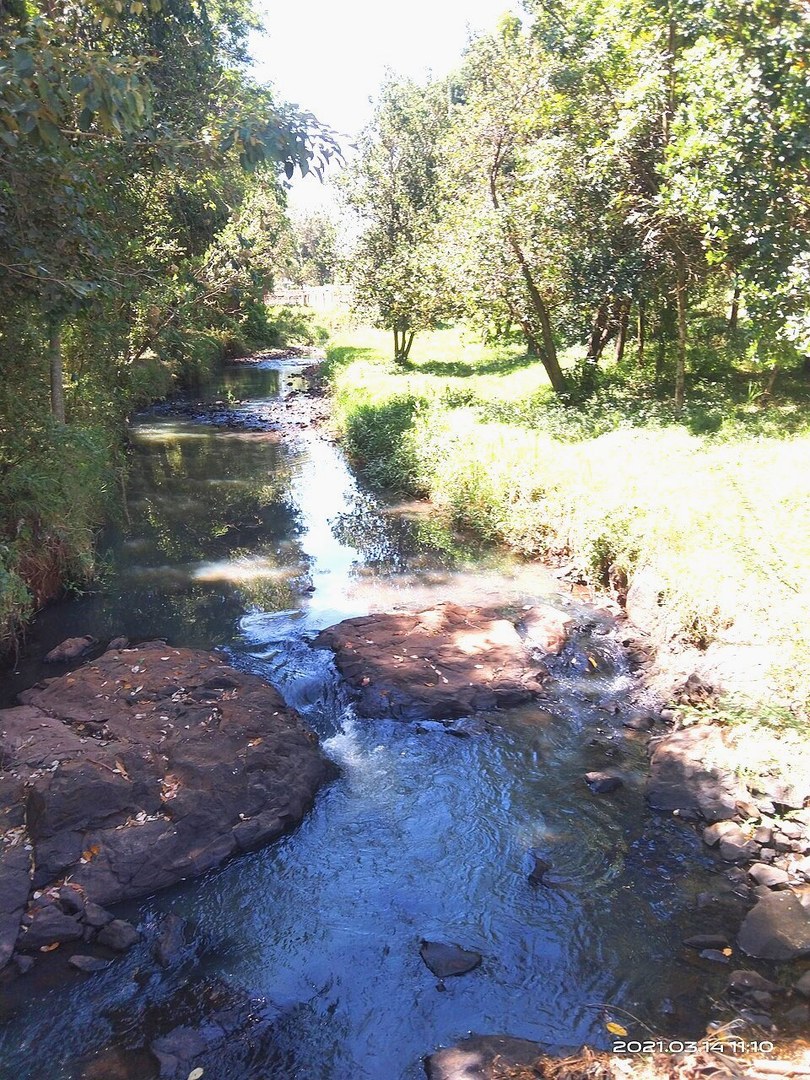
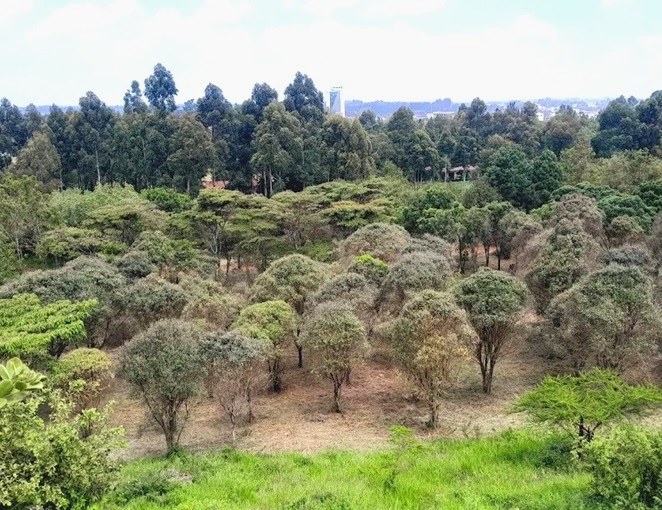
Climbing Mount Kenya Brief Overview of Climbing Mount Kenya Of the five mountains in Africa whose peaks rise over 14,000 ft., only three are permanently snow-capped – Kilimanjaro (19,340 ft), Kenya (17,058 ft) and the Ruwenzoris (16,763 ft). They were climbed in that order; Kilimanjaro being first in 1888, Kenya second in 1889, and the Ruwenzoris in 1906. Every year, when the faces are in condition, thousands of intrepids take to these three mountains for the climbing challenge. Mount Kenya, which is more scenic than faunal, is a walkers paradise for explorers and mountaineers. It is a huge extinct volcano, of which the crater has been substantially eroded away, leaving a central core of hard rock which form the highest peaks, draped by many glaciers, and sharp ridges. The highest peaks of Batian 17,058 ft., and Nelion 17,022 ft., can only be reached by those climbers who are well skilled in the use of rope and ice-axes. The third highest peak, however, Lenana 16,355ft., can be reached by almost anyone who is fit, and was in fact been ascended by a 6-year old from the Royal Family in Saudi Arabia in 2008; with the oldest yet being an 80-year old Asian man. It can be reached through eight different trails, but the two most popular are Naro Moru and Sirimon. The snowy peaks of Mount Kenya, lying just south of the equator, rise from the Laikipia Plains in the mid-central region of Kenya. All the area over 11,000 ft., forms Mount Kenya National Park, which was listed as a UNESCO World Heritage Site in 1997 for its unique flora and biodiversity selection. It covers parts of Nyeri , Embu , Meru , Tharaka Nithi and Kirinyaga Counties, controlled by a National Park Warden based at Nyeri. Approximately half of the remainder of the area between the 11,000 feet contour and levels between 5,000 and 7,000 feet is the Mount Kenya Forest , which is controlled by Forest Officers situated at Nanyuki, Gathiuru, Kabaru, Hombe, Ragati and Castle Forest Station, and at Embu Forest Station at Irangi. There are two main seasons for climbing Mount Kenya; December to Mid-March (when the South Face is in condition), and July to October (when the North Face is in condition.) Scenery on the way up Mount Kenya. Image by Travel Blog Climate of Mount Kenya The climate of Mount Kenya is of particular interest on account of its extreme range from the warm lowlands to the severe alpine region with its very large diurnal temperature range. The range between the minimum and the maximum temperatures decreases with altitude, being 11-5° Celsius at 10,000 feet, 7-5° Celsius at 13,700 feet and 4° Celcius at 15,700 feet. On almost all sides of the moorland and alpine zones of the mountain the maximum temperatures are reached between 9:00 a.m and 12:00 p.m On the western slopes the temperature drops after noon due to the afternoon cloudiness, but this is less marked on eastern slopes. At levels between 10,000 and 14,000 feet the relative humidity on the western slopes varies inversely with the temperature, being at a mean minimum of approximately 35-45 per cent in the midmorning, but rising to a maximum at 7.00 p.m in the early evening, when it reaches 70-90 per cent. At Top Hut (15,700 feet) however the relative humidity minima and maxima are earlier in the day, at 7.00 a.m and at 12.00-4.00 p.m respectively. Rainfall is strongly seasonal and occurs mostly at changes of the monsoon in April-May and November-mid December as does with the rest of Kenya in a general sense. The Vegetal Profile on Mount Kenya The Central Region of Kenya is dominated by the large bulk of the dome-shaped Mount Kenya volcanic pile, that bears a chain of ten small glaciers on its peaks. Its volcanics are believed to be primarily of Pleistocene age . Mount Kilimanjaro, having an immensely broad, flat dome-shaped top has a considerably greater surface of snow (than Mount Kenya) for its glaciers to draw upon. Presumably this alone would cause its glaciers to be pushed further down the hill than is the case on Mount Kenya. In addition to that it is almost 2,000 ft, higher, so there's 2,000 ft more of snow. The snow, then, on Mount Kenya is inconsiderable when compared with that on Mount Kilimanjaro. The vegetation on Mt. Kenya shows strong altitude zoning, and the flora of the higher part of the mountain has been called an "Afro-Alpine" flora, which shows considerable similarities to that of the other high East African mountains. The vegetational belts are: Alpine Belt; Ericaceous Belt; Montane Forest; and Savanna and cultivated Belt. The lower most belt (Savanna and cultivated belt) extending up to the lower edges of the Mount Kenya Forest at altitudes between 6,000 and 7,000 feet is the cultivated or pastoral belt. The second belt – Montane rain forest – extends up to levels of 11,000 feet on the west and south side and to 10,000 feet on the east and north. The Montane rain forest zone reaches its maximum development on the south-east sector of the mountain. It is distinguished by the occurrence of evergreen hardwood trees and some conifers. Cedars and Podos are the most widespread on the western slopes, and camphor trees mainly occur in the south and south-east. The Montane rain forest passes upwards into the bamboo zone, which is best developed on the south-east slopes. The lower margin of the bamboo zone is at approximately 8,000 feet in the south-east, 7,000 feet in the south, rising to 9,000 feet in the north-west. The bamboo zone thins markedly in the north-west, and is absent in the north. Podo trees occur in the bamboo in the west and south sectors, but in the south-east there are large areas consisting exclusively of bamboo. The lower margin of the Ericaceous belt is generally well-defined, and is marked by the transition to giant heather. On its west the forest is thin, absent or dead, the higher parts of the belt containing only patches of shrubby heather obviously affected by fire and regenerating by means of basal shoots. The Alpine belt is synonymous with "the moorland", and is open, often marshy ground marked by the well known giant groundsel, tussock grasses, and shrubs. Afro-alpine Vegetation on Mount Kenya Hiking Mount Kenya Overview, Climate and Vegetal Profile Mount Kenya One Day Hike Tour History About Climbing Mount Kenya The Seven Trails Up Mount Kenya Continue Reading… Visit Kenya: 6 Reason to Visit Kenya Overview of the Geography of Kenya Climate and Agro-climatic Zones in Kenya How Kenya is Dealing with Climate Change Coast, Safaris, Fauna and Flora in Kenya 10 Outstanding Game Parks in Kenya 10 Funny Things About the Mara Migration 13 Unique Hotels Around Kenya Unique Safari Lodges in Kenya Climbing in Kenya – Hiking in Kenya 10 Funny Things About Driving in Nairobi Health Regulations in Kenya – Malaria Kenya Visa Information & Requirements
Source Images
- https://thisiskenyahome.wordpress.com/wp-content/uploads/2020/03/hiking-mount-kenya-1.jpg?w=800
- https://thisiskenyahome.wordpress.com/wp-content/uploads/2020/04/scenery-on-the-way-up-mount-kenya-0-1.jpg?w=800
- https://nirbhasa.srichinmoycentre.org/files/Members/shane_magee/blog/archive/2007/01/23/memories-of-mount-kenya/images2007/schnee.jpg
- https://abirikenya.com/wp-content/uploads/2021/04/plan-your-safari.png